 EN
EN
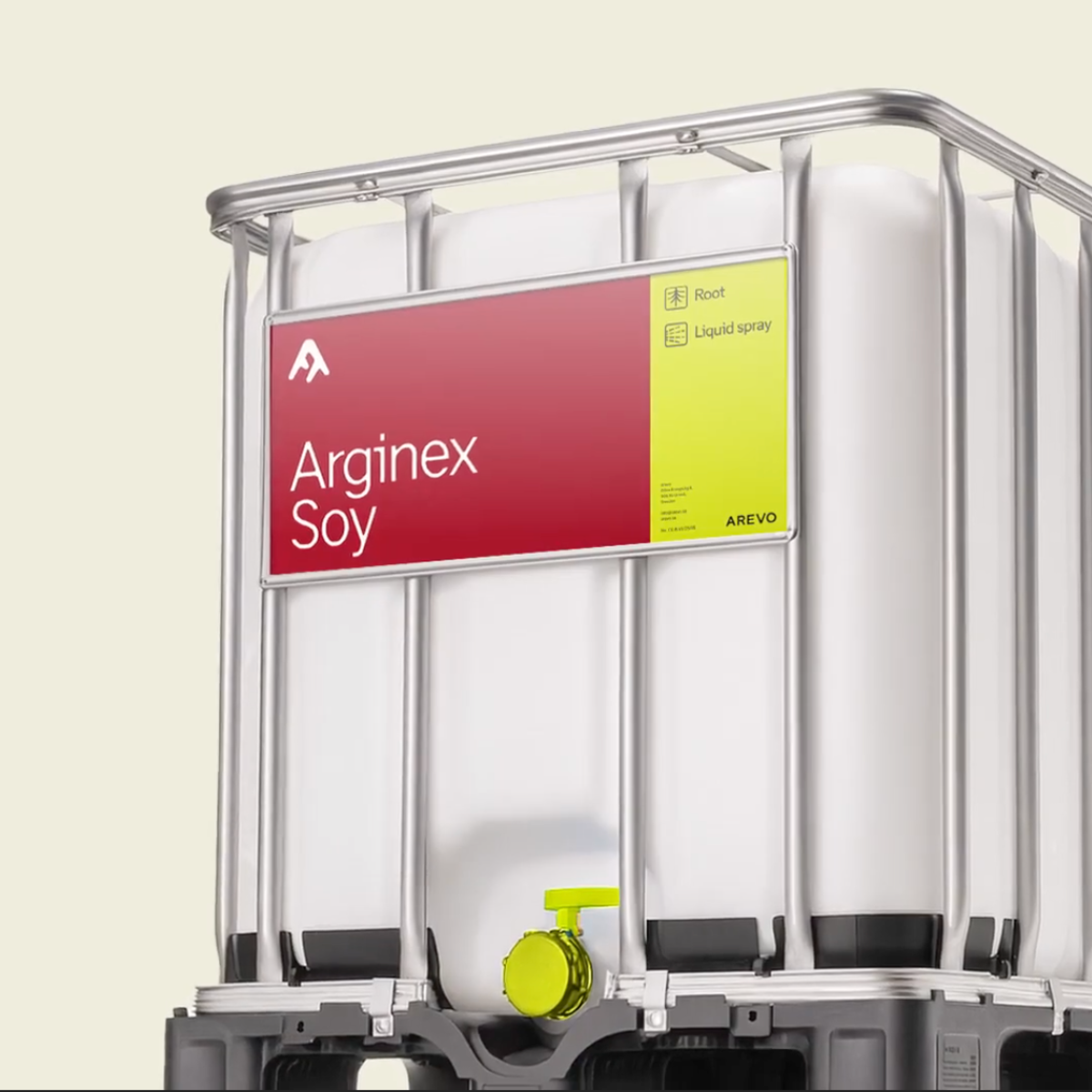
Seed coating for soy plants has become an increasingly important tool in modern agriculture as farmers seek to improve early crop establishment, protect seedlings, and increase yield stability under variable field conditions. Soybean (Glycine max) is particularly sensitive during germination and early vegetative growth, when stress from cold soils, drought, pathogens, or nutrient limitations can permanently reduce yield potential.
Seed coating technologies address these challenges by placing protective and stimulatory compounds directly on the seed surface, ensuring immediate proximity to the emerging root system. Unlike traditional in-season inputs, seed coatings work from the very first stages of plant development, making them one of the most efficient intervention points in soybean production systems.
What is seed coating in soybeans
Seed coating refers to the application of materials onto the surface of soybean seeds to improve handling, protection, and early plant performance. These materials may include polymers, nutrients, biological agents, biostimulants, or combinations of these components.
In soybeans, seed coatings are commonly used to:
-
Protect against soil-borne pathogens
-
Improve germination and emergence
-
Enhance early root development
-
Deliver nutrients or stimulants precisely at planting
Unlike bulk soil applications, seed coating places active compounds exactly where the young seedling needs them, reducing waste and improving efficiency.
Why early soybean growth is critical
Yield potential in soybeans is strongly influenced by early-season conditions. Research shows that stress during germination and early vegetative stages can reduce plant stand, delay nodulation, and limit root system development, all of which reduce final yield.
Soybeans rely on rapid root establishment to:
-
Access water and nutrients
-
Form symbiotic relationships with nitrogen-fixing rhizobia
-
Compete with weeds
-
Build the foundation for reproductive growth
Seed coating supports these processes by improving early vigor and reducing exposure to environmental stress.
Types of seed coating technologies used in soybeans
Protective coatings
Protective coatings include fungicides and insecticides designed to shield seeds and seedlings from early pest and disease pressure. These coatings reduce seedling mortality and help ensure uniform emergence.
Polymer coatings
Polymers improve seed flowability and allow uniform distribution of active ingredients. They also help regulate water uptake during germination, reducing the risk of imbibitional injury under cold or uneven soil moisture conditions.
Nutrient-based coatings
Micronutrients such as zinc, manganese, and molybdenum are sometimes applied as seed coatings to support enzymatic activity and early metabolic processes. Because these nutrients are placed directly on the seed, very small quantities can be effective.
Biological and biostimulant coatings
Biological seed coatings include beneficial microbes, while biostimulant coatings contain compounds that stimulate natural plant processes. These coatings focus on improving root growth, nutrient uptake efficiency, and stress tolerance rather than directly supplying nutrients.
Seed coating and root system development
One of the most important benefits of seed coating for soy plants is its effect on root architecture. Enhanced early root development leads to:
-
Increased root length
-
Greater root branching
-
Higher density of fine roots and root hairs
This expanded root system increases the effective root–soil contact area, allowing plants to explore a larger soil volume for nutrients and water. Strong early roots also improve anchorage and resilience during dry or compacted soil conditions.
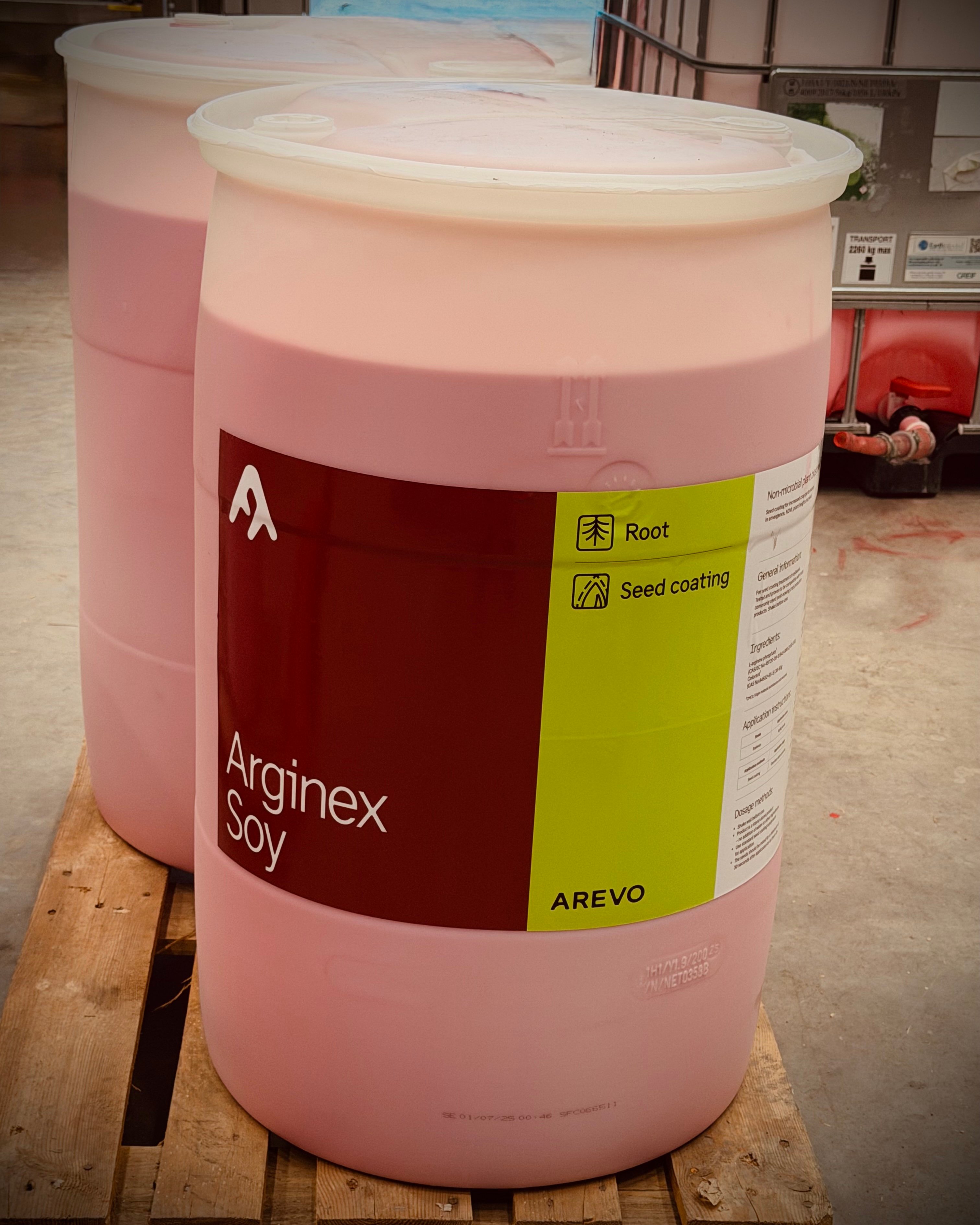
Interaction with soil biology
Seed coatings can also influence the biological activity of the rhizosphere, the narrow zone of soil surrounding plant roots. Certain seed coatings support beneficial soil microorganisms by:
-
Stimulating root exudation
-
Creating favorable microenvironments near the seed
-
Enhancing early microbial colonization
In soybeans, this is especially important for the establishment of rhizobia and the formation of nitrogen-fixing nodules. Healthy early root–microbe interactions contribute to long-term nitrogen availability and plant health.
Benefits of seed coating for soybean growers
When properly designed and applied, seed coatings provide several agronomic benefits:
-
Improved germination and emergence uniformity
-
Stronger early vigor and faster canopy development
-
Enhanced root growth and nutrient uptake
-
Reduced need for corrective in-season inputs
-
Greater yield stability under stress conditions
Because coatings are applied directly to the seed, they offer a high return on investment by minimizing losses and maximizing early efficiency.
Environmental and sustainability considerations
Seed coating supports sustainable agriculture by:
-
Reducing the total amount of inputs needed per hectare
-
Limiting nutrient losses to leaching or runoff
-
Targeting active ingredients precisely where needed
-
Supporting soil health through improved root–soil interactions
These advantages align with modern goals of increasing productivity while reducing environmental impact.

Challenges and limitations
Despite its benefits, seed coating is not a universal solution. Performance can vary depending on:
-
Soil type and moisture
-
Temperature at planting
-
Seed quality
-
Compatibility between coating components
Proper formulation, application accuracy, and integration with overall crop management are essential for consistent results.
Conclusion
Seed coating for soy plants is a powerful agronomic tool that enhances early establishment, supports root development, and improves yield stability. By acting at the most critical stage of soybean development, seed coatings help farmers manage risk, improve efficiency, and build more resilient cropping systems.
As agriculture continues to shift toward precision and sustainability, seed coating technologies will play an increasingly central role in soybean production.
References and sources
Halmer, P. (2008). Seed technology and seed enhancement. Acta Horticulturae, 771, 17–26.
https://doi.org/10.17660/ActaHortic.2008.771.1
Pedrini, S., Merritt, D. J., Stevens, J., & Dixon, K. W. (2017). Seed coating: Science or marketing spin? Trends in Plant Science, 22(2), 106–116.
https://www.sciencedirect.com/science/article/pii/S1360138516302584
Taylor, A. G., & Harman, G. E. (1990). Concepts and technologies of selected seed treatments. Annual Review of Phytopathology, 28, 321–339.
https://www.annualreviews.org/doi/10.1146/annurev.py.28.090190.001541
Iowa State University Extension. Soybean growth and development.
https://crops.extension.iastate.edu/soybean