Why Arginex vegetables taste better: the root-zone science

Most growers have heard the word mycorrhiza. Far fewer have seen what it does.
Ask a chef to taste two carrots side by side and the answer comes back fast. One has snap, sweetness and a clean finish. The other doesn’t. Same variety, same soil, same week. The difference is what fed the root.
Here is the science of why Arginex-treated vegetables taste better — five mechanisms, all running at the root zone, all rebuilding what conventional fertilisation quietly takes away.
Sugar and Brix content
Brix is the headline number for vegetable flavour. It measures soluble solids — mostly sugars — in plant sap, and it correlates directly with how a vegetable tastes on the plate. Higher Brix means sweeter, richer, more complex flavour. Lower Brix means watery, flat, forgettable produce.
Arginine — the active compound in Arginex — supports improved nitrogen metabolism. When plants take up nitrogen as nitrate, they spend significant carbohydrate energy converting it into a usable form before they can build proteins. Arginine arrives at the root already in an amino-acid form the plant can use directly. The result: more of the plant’s carbohydrate budget stays free for sugar accumulation in the edible tissue, not for processing surplus nitrate (Näsholm et al., 2009).
Cell structure and texture
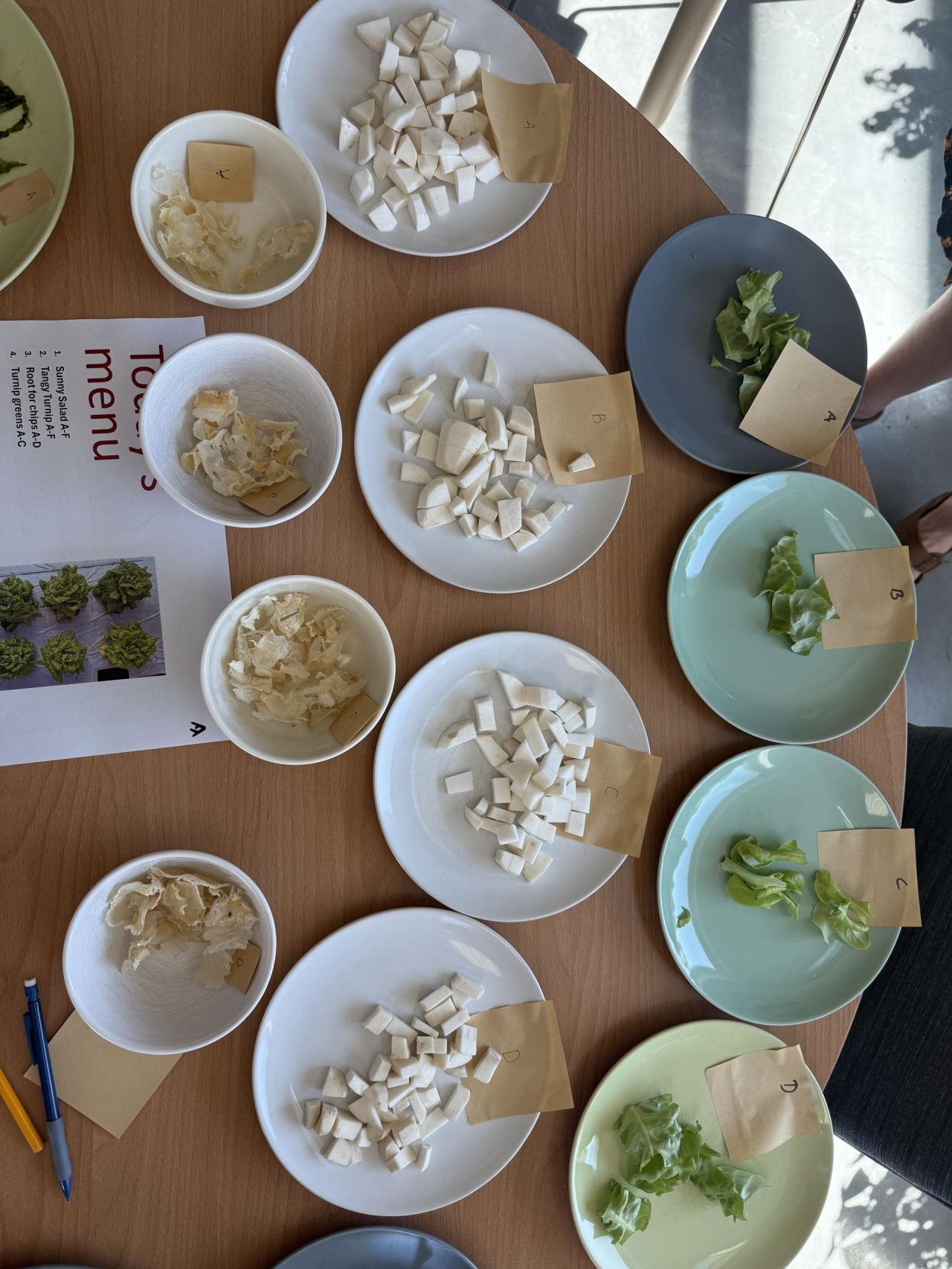
Texture is half of taste. A cucumber with snap, a tomato with firm flesh, a carrot that breaks clean — those are not just preferences, they’re cellular outcomes. They come from uniform cell wall development, which depends on steady nutrient supply during the rapid expansion phase of fruit and root growth. Arginex’s slow, root-zone release of nitrogen and phosphate means the plant never goes through the boom-and-bust nutrition cycle that conventional broadcast fertilisation creates. Cells form at consistent rates, walls build evenly, and the finished tissue is firmer and more uniform. Consumers and chefs read that firmness as freshness — even when the produce is days old.
Translate that into the field: stronger early vigour, less dependence on starter P, and crops that handle a dry week without going backwards.
Reduced nitrate accumulation
The bad news: most of how modern agriculture is practised actively suppresses mycorrhiza. Three habits do most of the damage.
High-nitrogen fertilisation leaves residual nitrate in plant tissue. In leafy greens — spinach, rocket, lettuce, chard — that residual nitrate causes a sharp, slightly metallic bitterness that masks the vegetable’s own flavour. The EFSA has flagged elevated nitrate levels in leafy vegetables as both a flavour and a food-safety concern (https://www.efsa.europa.eu/en/efsajournal/pub/689).
When nitrogen arrives as arginine instead of nitrate, the plant uses it more completely. There’s no surplus pool of nitrate waiting in the leaf tissue at harvest. The bitterness drops away and the actual flavour of the vegetable — the sweet, the herbal, the umami notes — comes through. Growers using Arginex on leafy crops consistently report this as the single most noticeable change.
Stress reduction at the root zone
Stressed plants taste different. When roots can’t reach the nutrients they need, when soil biology is suppressed, when nitrogen comes in damaging pulses, the plant produces stress compounds — glucosinolates in brassicas, oxalates in spinach, alkaloids in solanaceous crops. Some of these compounds are valuable. Too much of them tastes harsh, sharp, and grassy.
Arginex activates the root zone rather than overloading it. Roots expand, soil colloids hold the positively-charged arginine where it’s needed, and the plant runs less stress chemistry. The flavour of the finished crop is rounder, sweeter, less defensive. Tomato growers describe it as the difference between a tomato that tastes like a tomato and one that tastes like a complaint.
Mineral balance and flavour compounds
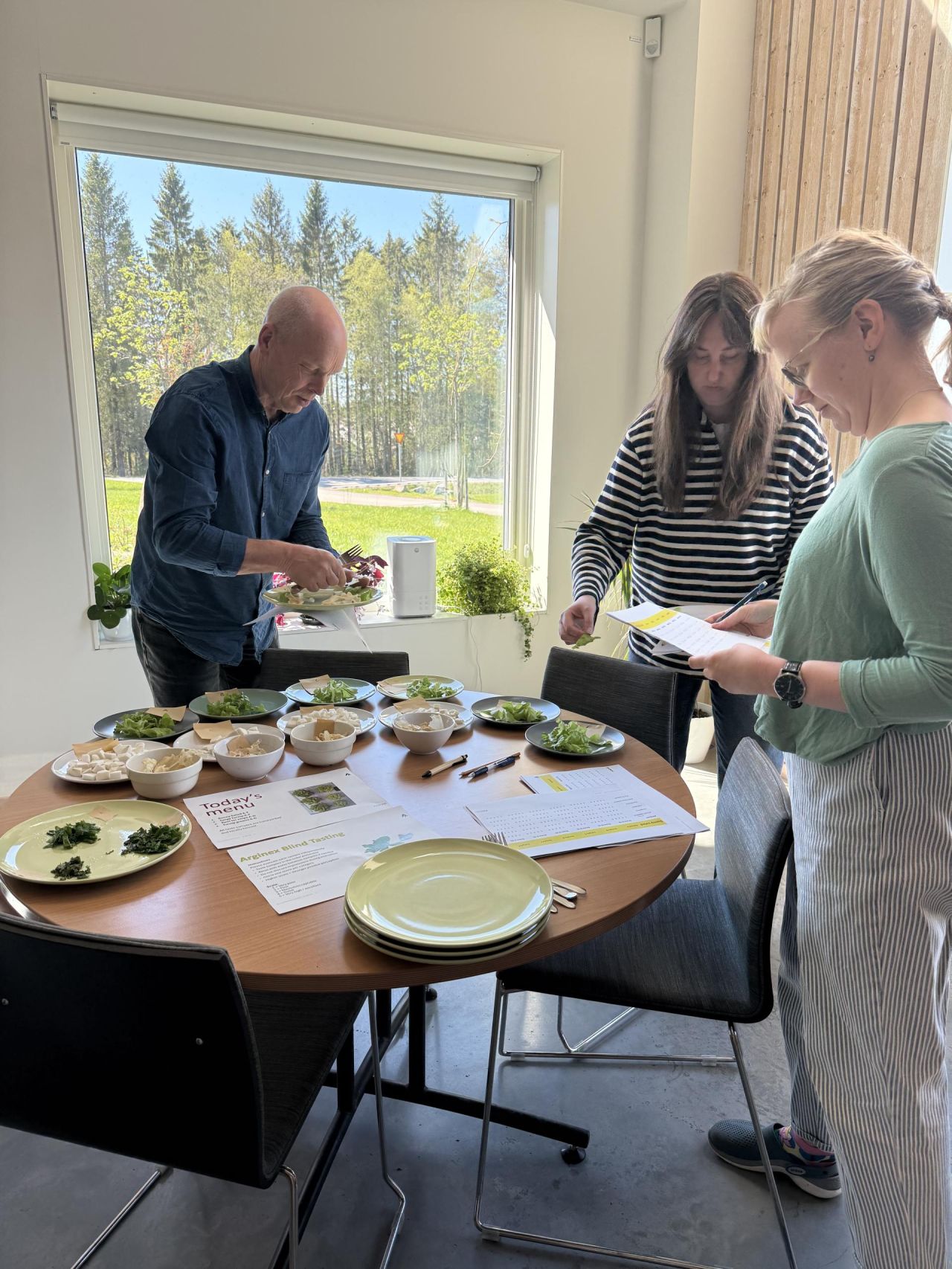
Flavour isn’t just sugar. Calcium, magnesium, potassium and trace elements are the building blocks of the volatile compounds that give each vegetable its character — the green note in pea, the sulphur kick in onion, the earth in beetroot. When the root zone supports better calcium and magnesium uptake, the plant builds more of these compounds.
The same balance matters for what happens after harvest. The Maillard precursors that give roasted vegetables their depth — the caramelised carrot, the burnished onion, the sweet roasted parsnip — are built from amino acids and reducing sugars that are themselves dependent on root-zone nutrition. Arginex’s arginine-phosphate complex supports both sides of that equation (https://arevo.se/en/knowledge-space/arginex-by-arevo-a-new-standard-in-crop-nutrition-technology).
What the field data shows on growing tastier vegetables
Brix differences between conventionally-fertilised and arginine-fed vegetable crops are not marginal. Trials on tomato, cucumber and pepper crops have shown Brix increases of 1 to 2 degrees on the same variety under the same growing conditions when arginine-based nutrition replaces synthetic nitrate (https://arevo.se/en/science-publications-on-plant-nutrient-delivery-system). For context: a 1-degree Brix difference is the gap between a supermarket tomato and a farmers’ market tomato.
On leafy greens, the change shows up faster. Within a single cropping cycle, growers report lower nitrate residues at harvest, longer shelf life, and direct positive feedback from chefs and direct-market buyers. Taste isn’t a soft outcome. It’s measurable, repeatable, and tied directly to the form of nitrogen that reaches the root.
Taste the difference. Rooted in science.
The reason Arginex vegetables taste better isn’t marketing. It’s chemistry: arginine instead of nitrate, slow release instead of broadcast spikes, root-zone activation instead of soil suppression. Five separate flavour mechanisms all running on the same root-zone change.
That is what Root Change tastes like. Sweeter at the harvest, cleaner on the plate, firmer in the bag, longer in the kitchen. The proof is in the bite — and now you know why.
References
Näsholm, T., Kielland, K., & Ganeteg, U. (2009). Uptake of organic nitrogen by plants. New Phytologist, 182(1), 31–48. https://arevo.se/en/science-publications-on-plant-nutrient-delivery-system
EFSA Panel on Contaminants in the Food Chain. (2008). Opinion on nitrate in vegetables. EFSA Journal, 689, 1–79. https://www.efsa.europa.eu/en/efsajournal/pub/689
Franklin, O. (2016). The carbon bonus of organic nitrogen enhances nitrogen use efficiency. Plant Cell & Environment. https://arevo.se/en/science-publications-on-plant-nutrient-delivery-system
Tünnermann, R. et al. (2024). Plant organic nitrogen nutrition: costs, benefits, and carbon use efficiency. New Phytologist. https://arevo.se/en/science-publications-on-plant-nutrient-delivery-system
Agtech Navigator. (December 2025). Arginine meets phosphate: New system promises ‘predictable and consistent yields’. https://www.agtechnavigator.com/Article/2025/12/02/arginine-meets-phosphate-new-system-promises-predictable-and-consistent-yields-start-up-says/
Arevo. (2025). Arginex by Arevo: a new standard in crop nutrition technology. Arevo Knowledge Space. https://arevo.se/en/knowledge-space/arginex-by-arevo-a-new-standard-in-crop-nutrition-technology
Arevo. (2025). Arginine: the key to zero nitrogen waste. Arevo Knowledge Space. https://arevo.se/en/knowledge-space/arginine-the-key-to-zero-nitrogen-waste